Mexc exchange is a low-fee crypto venue for spot markets and high-leverage futures
Centralized cryptocurrency exchange for spot and futures crypto trading, with zero-fee spot trades across its altcoin market.
Mexc exchange is a centralized cryptocurrency exchange known for zero-fee spot trading, a very large altcoin list, and perpetual futures with leverage advertised up to 200x. It serves traders who want Bitcoin, Ethereum, stablecoin pairs, early altcoin listings, copy trading, demo futures, and mobile execution in one account. The trade-off is custody: balances sit inside the exchange until a user withdraws them to an external wallet.
Spot trading draws the first look
The clearest reason traders search for Mexc exchange is the spot market. Spot orders exchange one crypto asset for another at the current order book price, so a BTC to USDT trade settles as a direct balance change inside the account. The platform lists major assets, stablecoin pairs, layer-1 tokens, DeFi names, gaming tokens, and a long tail of smaller projects that are absent from many conservative exchanges.
Zero spot maker and taker fees are the headline attraction. A trader placing limit orders or taking available liquidity avoids the percentage charge that many venues apply on every fill. That matters for frequent rotation between Bitcoin, Ethereum, Solana, XRP, DOGE, PEPE, and newly listed assets, because small charges compound quickly across dozens of entries and exits.
Futures margins, funding, and the 200x ceiling
On Mexc exchange , futures trading uses perpetual contracts rather than dated delivery contracts. A perpetual position tracks the price of an asset such as BTC or ETH through margin, funding payments, and liquidation rules. Leverage up to 200x magnifies exposure from a smaller margin balance, so a small price move changes account equity very quickly.
The low listed futures fees appeal to active traders, but funding rates and liquidation distance matter just as much as the entry fee. A 50x or 100x position leaves little room for normal volatility, especially on smaller altcoins where spreads widen during news events. Serious futures use starts with isolated margin, a defined stop, and position sizing that survives fast wicks.
Fees, MX Token, and exchange-native rewards
Fees make Mexc exchange attractive to high-frequency spot traders and futures users who compare every basis point. Spot trading is positioned around zero-fee execution, while futures pricing has been marketed with very low maker and taker rates. The exchange also uses MX Token as its native asset, linking it to platform campaigns, voting-style activities, and fee-related promotions.
Exchange rewards deserve a clear mental model. Launchpool, Kickstarter-style voting, airdrop campaigns, and token events reward platform activity, but they also pull users toward fresh listings with thin histories. Treat rewards as part of the trading environment, not as a reason to ignore liquidity, unlock schedules, contract risk, or whether the token has real demand outside its launch window.
Opening an account and moving funds
Opening a Mexc exchange account follows the familiar centralized exchange path: create login credentials, secure the account, complete identity steps when required, then deposit crypto or use supported fiat channels where available. The fastest route for many users is a stablecoin deposit, because USDT and USDC pairs dominate crypto trading screens across centralized exchanges.
Network selection is the detail that prevents expensive mistakes. A USDT withdrawal over Ethereum, Tron, Solana, BNB Smart Chain, or another supported network must match the receiving wallet exactly. The deposit page shows the valid network and address for that asset. Sending a token through the wrong chain creates a recovery problem that support teams do not always solve.
Altcoin discovery without losing the plot
The catalog is where Mexc exchange separates itself from fiat-first platforms. It lists a wide range of new and niche assets, including meme coins, DeFi tokens, ecosystem plays, and tokens tied to emerging chains. That breadth makes it useful for traders tracking narratives before those assets reach larger regulated exchanges.
A broad listing policy also creates noise. Order book depth, circulating supply, unlock timing, market maker behavior, and withdrawal status deserve attention before a trade. A token with a strong candle and weak liquidity exits poorly when momentum fades. The best use of the asset list is targeted discovery: build a watchlist, check volume against market cap, then trade only the pairs with enough depth for the intended size.
Charting, copy trading, and mobile execution
TradingView-style charts give technical traders the familiar toolkit: candlesticks, drawing tools, indicators, multiple time frames, and order placement near the market panel. This matters because altcoin markets move around liquidity pockets, previous highs, funding shifts, and news-driven volume bursts. Fast chart access reduces the gap between analysis and execution.
Copy trading and demo futures widen the audience. Copy trading mirrors another trader's strategy through preset risk controls, while demo trading lets a user learn order types without risking live capital. Neither feature removes the need to understand drawdown. A copied trader using high leverage still produces high-leverage results in the follower's account.
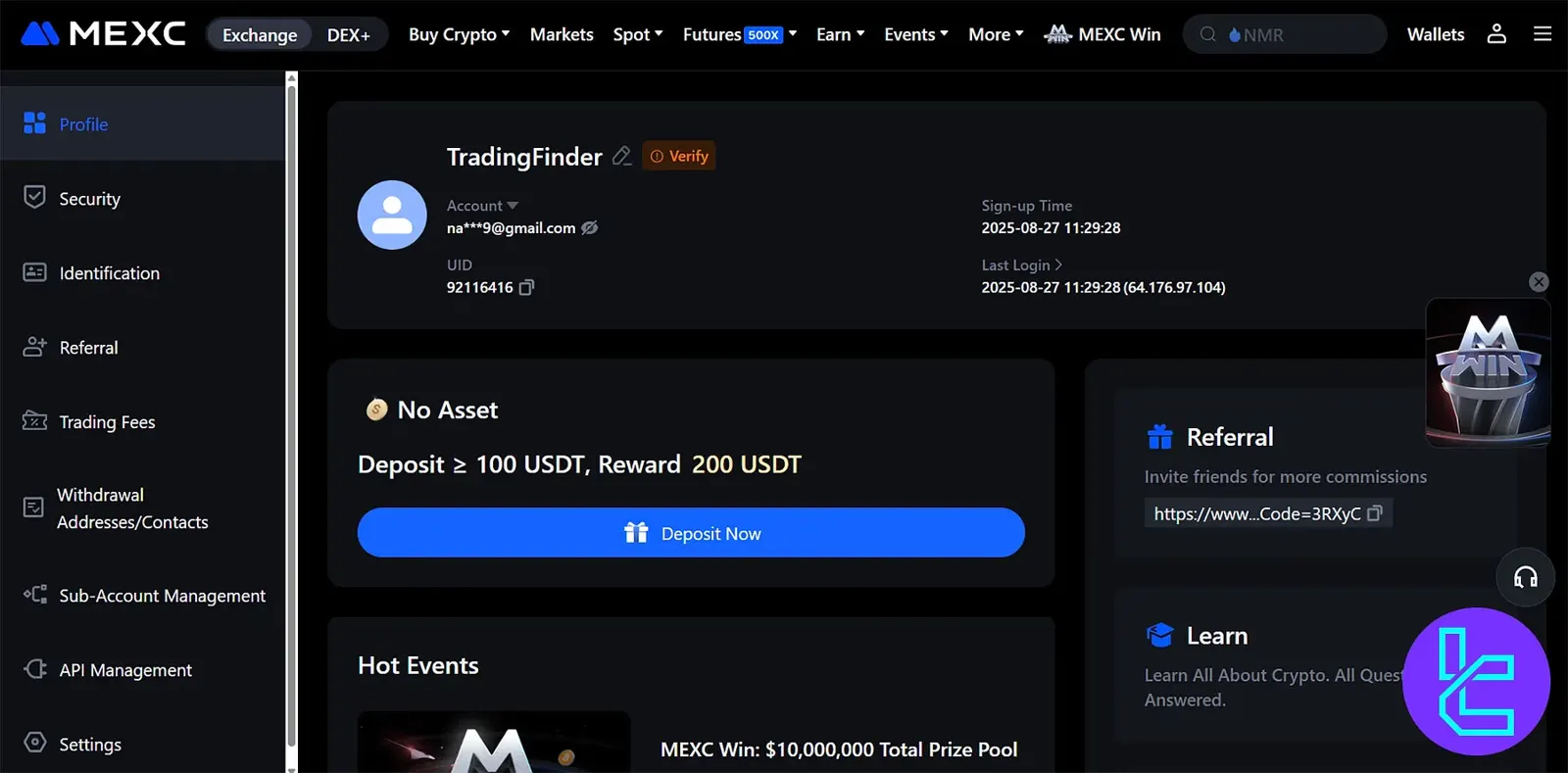
Security controls for a custodial account
Within Mexc exchange, account security starts with two-factor authentication, withdrawal address management, anti-phishing codes, device controls, and withdrawal confirmations. These controls reduce common account-takeover risks, especially when a user keeps exchange passwords separate from email passwords and avoids reusing authentication methods across services.
The platform has also published proof-of-reserves style information and describes the use of offline custody for a portion of assets. Those measures address exchange-level transparency, while the user still controls account hygiene. Keep only active trading funds on the venue, record withdrawal networks carefully, and test a new withdrawal address with a small transfer before moving a larger balance.
Binance, OKX, Bybit, and Kraken as reference points
No exchange is best for every trader. The right venue depends on listings, liquidity, regional access, fiat rails, futures tools, and the level of regulatory comfort a user wants. This table frames the trade-offs without treating any single platform as a universal answer.
| Exchange | Standout detail | Best fit |
|---|---|---|
| Mexc exchange | Large altcoin catalog, zero-fee spot trading, and futures up to 200x | Altcoin hunters and active crypto-to-crypto traders |
| Binance | Deep global liquidity and broad product coverage | Users who prioritize market depth across major pairs |
| OKX | Strong derivatives suite plus an integrated Web3 wallet | Traders who move between centralized trading and on-chain tools |
| Bybit | Derivatives-focused interface with copy trading features | Futures traders who want fast execution and strategy following |
| Kraken | Fiat ramps and a reputation for compliance-heavy markets | Users who value established fiat access and conservative listings |
Where it fits in a trading routine
Mexc exchange works best as a market-access tool: scan new listings, trade liquid spot pairs without spot fees, use futures only with strict margin discipline, and withdraw longer-term holdings to wallets designed for storage. Its strongest appeal is breadth, speed, and trading cost. Its main weakness is the same one shared by every centralized venue: account access, withdrawal status, and regional eligibility sit inside the platform's rules.
A sensible routine separates jobs. Use the exchange for execution, a portfolio tracker for performance, block explorers for deposit and withdrawal confirmation, and a self-custody wallet for assets held beyond an active trade. That structure keeps the platform useful without making it the only place where every token balance lives.
Mexc exchange FAQ
What withdrawal costs should traders expect on MEXC?
Withdrawal costs come from the network selected for the asset, not only from the exchange interface. A USDT withdrawal on Tron, Ethereum, Solana, or another supported chain carries different fees and confirmation behavior. The withdrawal screen shows the current charge before submission. The receiving wallet must support the same asset and network, because a cheap network is only useful when both sides match.
Is MEXC available to United States users?
Availability depends on the platform's country rules, identity checks, and product restrictions at signup. Some users in restricted regions lose access to certain services or cannot complete onboarding. The practical step is to confirm eligibility before depositing funds, because trading access and withdrawal permissions matter more than whether the app loads on a device.
Does MEXC require identity verification before withdrawals?
Identity verification requirements vary by account status, region, product, and risk review. A user who plans to trade size should complete the available security and verification steps before sending meaningful funds. This reduces interruptions when using fiat channels, increasing withdrawal limits, or accessing features that require a verified profile.
Can I use TradingView charts inside MEXC?
The trading screen includes charting tools built around the TradingView style of technical analysis. Traders get candlesticks, indicators, drawing tools, time-frame changes, and order book context near the order panel. That setup suits users who rely on support and resistance, moving averages, volume, and funding behavior before placing spot or futures orders.
Which stablecoins are commonly used for deposits and trading pairs?
USDT is the main quote asset across many crypto exchanges, and MEXC lists numerous USDT markets for spot and perpetual futures. USDC also appears in selected markets and funding routes. The exact deposit networks differ by asset, so the important detail is matching the token and chain shown in the deposit screen before sending funds.
What happens if a futures position reaches liquidation?
Liquidation closes a leveraged futures position when the margin balance no longer supports the trade. Higher leverage places the liquidation price closer to the entry price, so normal volatility becomes dangerous. Isolated margin limits the damage to the position's assigned margin, while cross margin draws from a wider account balance to keep the position open longer.
Lost two-factor authentication on MEXC: what should I do?
Account recovery starts through the platform's security process, where the user proves account ownership and resets the authentication method. Expect identity checks, email confirmation, and a withdrawal hold after sensitive security changes. Keeping backup codes, a secure email account, and updated device access prevents most two-factor lockouts before they interrupt trading.